
2025 MEETINGS & PRESENTATIONS
Dr. Andrea U. de Giorgi, Professor of Roman Archaeology at Florida State University and Getty Scholar
Cosa, the Colony and the Roman Expansion
 In the immediate aftermath of WWII Frank Brown (American Academy in Rome) began fieldwork at the site of Cosa, Italy. His program of excavations and research brought to light a constellation of public and religious buildings that are now mainstays in the discourse of Roman republican architecture, so much so that visual reconstructions of Cosa’s forum and temples made their way into virtually every survey of pre-imperial city planning and urban décor. It is no overstatement that the ingenuity of its builders, the historical vicissitudes, and a remarkable scholarly legacy situate this small colonial enclave at the center of the Roman world.
Yet for all their achievements, the excavations have explored only a limited portion of Cosa’s built environment; much remains to be done to illustrate how the colony organized its space and addressed the basic needs of its inhabitants. In that vein, the lecture addresses the nucleation and growth of the colony of Cosa in the context of the Roman conquest of Italy, harnessing the results of Florida State University’s on-going archaeological exploration.
Andrea U. De Giorgi specializes in Roman urbanism and visual culture from the origins to Late Antiquity, with emphasis on the Eastern Mediterranean and the Italian peninsula. He has directed excavations and surveys in Israel, Turkey, Syria, Georgia, Jordan, and the UAE. Since 2013, he has directed the Cosa Excavations, Italy. The ongoing excavation focuses on a bath establishment as well as on the investigation of the fortifications and the commercial areas of the Roman colony. In the Summer of 2024, he also took up the co-directorship of the Montereggi Project, a new initiative that through a battery of excavation and survey techniques endeavors to explore the cultural evolution of a hilltop site on the Arno river, spanning the Etruscan era and the Middle Ages. LEARN MORE ABOUT Dr. De Giorgi
Our October speaker has been named has been named The AIA Frieda Florence Renner Lecturer
Dr. Anna S. Cohen, from Florida State University
Creating an Empire: Political Consolidation Strategies in Western Mesoamerica, c. AD 1000-1530
 Archaeologists and other scholars find that, today and in the past, political entities like states and empires were diverse and sometimes short-lived. This means that the integration of existing communities required a targeted and organized approach that served as an ancient public relations campaign for political elites. At the time of European arrival in the Americas in the late fifteenth century, western Mesoamerica was ruled by the Purépecha Empire. As rivals of the Aztec Empire, the Purépecha were long thought to have established centralized control over 75,000 km2 from the capital city of Tzintzuntzan, directing existing communities to engage in key ritual activities and to pay tribute to the supreme ruler. Recent work at the capital city and at other urban centers is opening up different interpretations about how the Purépecha governed. This talk explores the archaeological evidence for political and cultural changes in Postclassic (AD 1000-1530) western Mesoamerica, as well as future work in the region.
Anna Cohen, Ph.D. is an anthropological archaeologist who focuses on human-environmental interactions and ancient urbanism in the Americas. She uses remote sensing techniques like lidar and ceramic analyses to investigate how precontact communities adapted to political changes in the centuries before European arrival in the Americas. Cohen received her Ph.D. and M.A. in anthropology from the University of Washington, an M.A. from the University of Chicago, and a B.A. from McGill University. In addition to Latin America, she has worked in various parts of Europe, India, the Pacific Northwest, the Great Basin, the Southwest and the Southeastern U.S.. (MORE ABOUT DR. COHEN)
Our September speaker has been named the Patricia and Richard Anawalt Lecturer on New World Archaeology by the national AIA.
Dr. Jeffrey M. Mitchem, Archaeological Conservancy
Searching for the Remains of Hernando de Soto's Cross at Parkin, Arkansas
 Parkin is a 17-acre Mississippian village site in northeast Arkansas. The state purchased it (with a lot of help from The Archaeological Conservancy) and turned it into a State Park with an ongoing program of field and laboratory archaeological research. Mitchem was the Station Archeologist there in 1990. His research led to the conclusion that it is the town of Casqui mentioned in all four accounts of the de Soto expedition. These accounts also describe the raising of a large wooden cross on a platform mound at the site. During the excavations, Mitchem consulted with the Quapaw Tribe of Oklahoma, who may be the descendants of the original Parkin residents
Jeff earned his doctorate at the University of Florida in 1989 under the direction of Dr. Jerald T. Milanich, with his graduate work focused on early Spanish contact sites in Florida. He was the field supervisor for three field schools at the Tatham Mound site, a late prehistoric/early contact site and this work served as the basis of his dissertation Redefining Safety Harbor: Late Prehistoric/Protohistoric Archaeology in West Peninsular Florida (Mitchem 1989). Following short term appointments at Florida State University and Louisiana State University, Dr. Mitchem was hired in 1990 to establish the ARAS Parkin Research Station as part of Parkin Archeological State Park, the site of a 17-acre Mississippian fortified village (ca. AD 1000-1600) and believed to be the village of Casqui described in the narratives of the Hernando de Soto expedition.
Megan Fry, NAGPRA Coordinator and Bioarchaeologist, FMNH
Introduction to NAGPRA: Archaeological, Ethnographic, and Natural History Collections

The Native American Graves Protection and Repatriation Act (NAGPRA) outlines the responsibilities of the U.S. government, museums, and federal agencies towards the treatment and return of Ancestral human remains, funerary objects, objects of cultural patrimony, and sacred items. This talk explores the ongoing impact of NAGPRA on museum collections, including natural history, ethnographic, and archaeological collections. Specifically, we will examine the new updates, which went into effect January 12, 2024, highlighting both their successes and their limitations. Through case studies, this presentation underscores the ethical imperatives of repatriation, the role of collaboration in the process, and the broader implications for cultural heritage and Indigenous sovereignty.
Megan is the NAGPRA Coordinator and Bioarchaeologist for the Florida Museum of Natural History. Additionally, she is a PhD. candidate at the Department of Anthropology at the University of Florida. Under the supervision of Dr. John Krigbaum, her dissertation combines osteological, stable isotope (Sr, Pb, C, N, and O), and funerary data to understand the relationship between identity, personhood, and social inequality. Additionally, she has undertaken certificate degrees in Historic Preservation and Museum Studies where her research focuses on the African Diaspora. Working with descendant communities, she assists in heritage conservation of at-risk sites as a form of restorative justice. Currently she is working with the Newnansville African American Cemetery to help locate unidentified burials from as early as 1820. She received her B.A. in Anthropology from the University of Cincinnati, and her M.A. in Anthropology from the University of Florida. She was a National Science Foundation Graduate Research Fellow from 2020-2023.
Dr. Geoff Emberling, the AIA’s Joukowsky Lecturer for 2025
Kush and the Roman World: Warrior Queens along the Nile
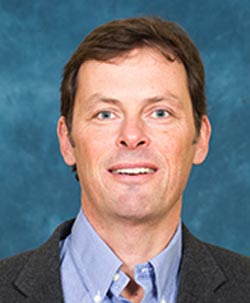
Ancient Kush was one of the earliest and longest-lived empires in Africa, rivalled only by Egypt. We think of Kush in terms of its relationship to Egypt of the pharaohs, but in fact Kush remained in power long after the last Egyptian pharaoh and indeed was rival and trade partner of ancient Rome after the Roman conquest of Egypt in 31 BCE. The initial contact with Rome resulted in a series of skirmishes in which the Kushite army was led in battle by a ruling queen or kandaka, who one Roman source described as “a masculine sort of woman who was blind in one eye.” The kandakas were part of a long line of powerful Kushite royal women, and they remain important symbols even in Muslim Sudan. This talk describes the long relationship between Kush and the Roman world, including espionage, conflict, and a long and rich trade and gift exchange.
Dr. Geoff Emberling is an Associate Research Scientist working at the Kelsey Museum of Archaeology, University of Michigan. He holds his degrees from the University of Michigan (Ph.D.) and Harvard University, and his research interests include the ancient Middle East (Mesopotamia) and ancient North Africa (Nubia and Kush), particularly early states, cities, and empires, ethnicity and identity, heritage, and collaborative community archaeology. Since 2012 he has co-directed archaeological projects at El-Kurru and Jebel Barkal in northern Sudan.
Dr. Jessi Halligan from Texas A&M University
Why underwater? The importance of submerged landscape research for understanding Pleistocene peoples in the New World

Perhaps most people think of shipwrecks when underwater archaeology is mentioned, but numerous formerly-terrestrial sites have survived drowning in our freshwater lakes and rivers and on our continental shelves. These sites can even be better preserved than their dry counterparts, and in some cases they can help us answer some of the most pressing questions about people in the past. Thousands of Pleistocene artifacts have been discovered in Florida’s rivers and springs, along with some of the best preserved early sites in the Americas. These sites are challenging archaeological models for the peopling of the Americas and are providing us with information about the lifeways of early Indigenous peoples in the New World.
Dr. Jessi J. Halligan is the Associate Director of the Center, an Associate Professor of Anthropology, and holds the Chair in First American Studies. She arrived at the Center in January 2024 from Florida State University. She specializes in the archaeology of drowned landscapes and the initial peopling of the Americas during the end of the Pleistocene. She currently is directing projects on late Pleistocene and early Holocene archaeological sites in the Aucilla River Basin in northwestern Florida, co-directing a submerged landscape survey in Lake Erie, and co-directing a collaborative project with the Bureau of Ocean and Energy Management to revise the Gulf of Mexico submerged pre-Contact archaeological survey guidelines. She has more than 30 years of professional archaeology experience, having directed projects on the Great Plains, the Midwest, Texas, and the Northeastern US, in addition to her current research in the Gulf region and the Great Lakes.
Dr. Andrea Torvinen,
Collections Manager of the Florida Archaeology and Ceramic Technology Laboratory at the Florida Museum of Natural History/UF
The Role of Collective Action in Community Resilience in Northwest Mexico
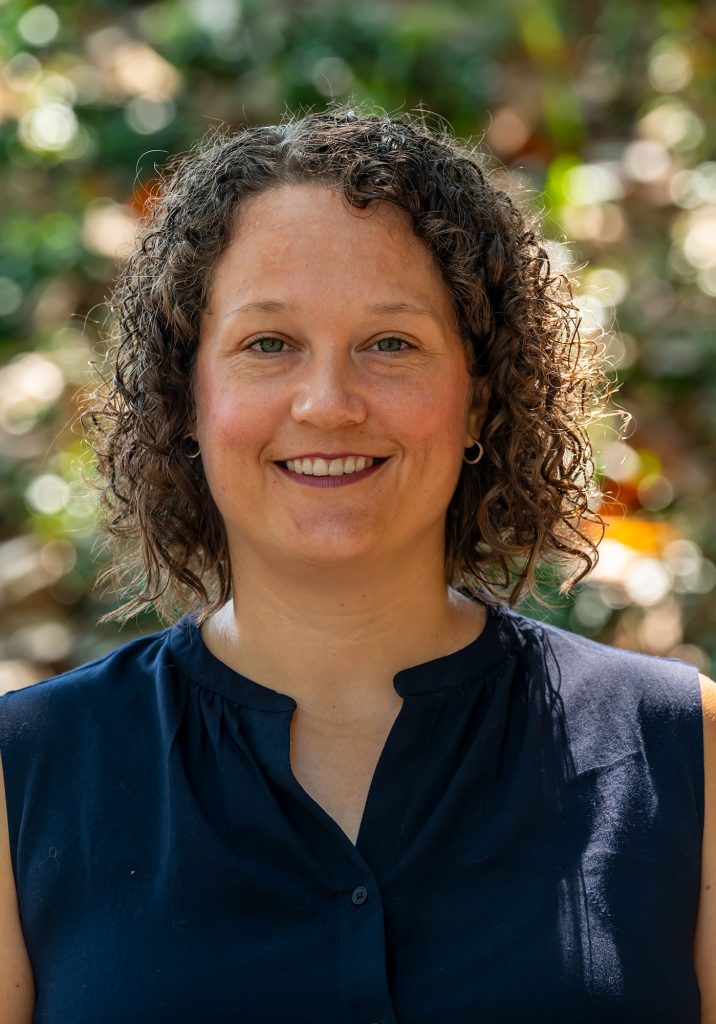
Dating to the Epiclassic period (600-900 CE), La Quemada, Zacatecas, Mexico, was founded during the cultural florescence of the northern frontier of Mesoamerica, but the site was abandoned ca. 800-900 CE while neighboring hilltop centers persisted. Having previously ruled out climate change as a contributing factor to the site's decline, this research investigates whether internal social unrest or shifting political or economic networks may have played a role. Specifically, did a change in how the occupants of La Quemada identified with one another decrease the potential for collective action over time? Material proxies in the form of ceramic styles (i.e., decoration or vessel forms) and fabric classes (i.e., petrographic and chemical data) are used to assess the temporal and spatial consistency of social identification at multiple socio-spatial scales within the site of La Quemada. Despite fluctuations, there was a high potential for collective action preceding site abandonment, suggesting that a disruption in the social fabric of La Quemada did not contribute to its decline. Therefore, being cut off from social networks developing between West and Central Mexico likely impacted the long-term resilience of La Quemada.
Andrea is an anthropological archaeologist interested in community resilience and social identity, compositional and technological ceramic analysis, and collective action among middle-range societies. Her primary research areas are West Mexico and the U.S. Southwest but she has also engaged in fieldwork in northern Iceland and west-central Illinois.
Dr. Daniel Pullen from Florida State University
A Late Bronze Age “Naval Station” at Kalamianos (Saronic Gulf), Greece?
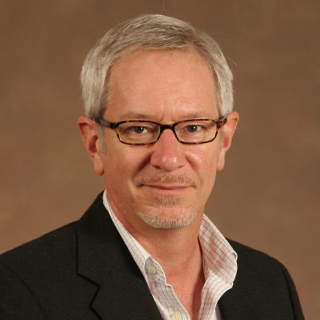 The Saronic Harbors Archaeological Research Project has documented the Late Bronze Age (14th-13th cent. BCE) harbor town at Kalamianos on the Saronic Gulf coast of the Corinthia, Greece. We suggest this site might be the Homeric town of “Eïones” which later Strabo identified as a “naval station.” The implications of this identification of Kalamianos as a naval station are evaluated in light of our current understanding of the archaeology of maritime culture, both commercial and military, of the Mycenaeans and other Late Bronze Age (LBA) peoples of the Aegean. The lack of identifiable maritime infrastructure – let alone that for specialized military activity – outside of Crete, including at Kalamianos, suggests that such installations were not essential for LBA maritime activities elsewhere in the Aegean.
Professor Pullen is an archaeologist with training in Anthropology and Classical Archaeology, working in the prehistoric Aegean region, especially the later Neolithic–Early Bronze Age and the Mycenaean/Late Bronze Age. His research interests lie in the emergence of complex societies (the state and political economy) as seen through changes in regional settlement patterns, monumental architecture, and political economy and administration; landscape archaeology; the interaction of coastal settlements with maritime and landbound areas; and agriculture in ancient societies. His current research projects include the Late Bronze Age (Mycenaean) harbor settlement at Kalamianos on the Saronic Gulf of southern Greece; the Final Neolithic period at Alepotrypa Cave in the Mani of southern Greece; and the Early Bronze Age in western Anatolia, especially around the ancient city of Sardis. His major publications include the co-authored Artifact and Assemblage: The Finds from the Southern Argolid Survey (Stanford 1995), The Early Bronze Age Village on Tsoungiza Hill (Nemea Valley Archaeological Project I) (American School of Classical Studies at Athens 2011), the edited volume Political Economies of the Aegean Bronze Age (Oxbow 2010) from one of the department's Langford conferences, and most recently the co-edited book Neolithic Alepotrypa Cave in the Mani, Greece (Oxbow 2018).